
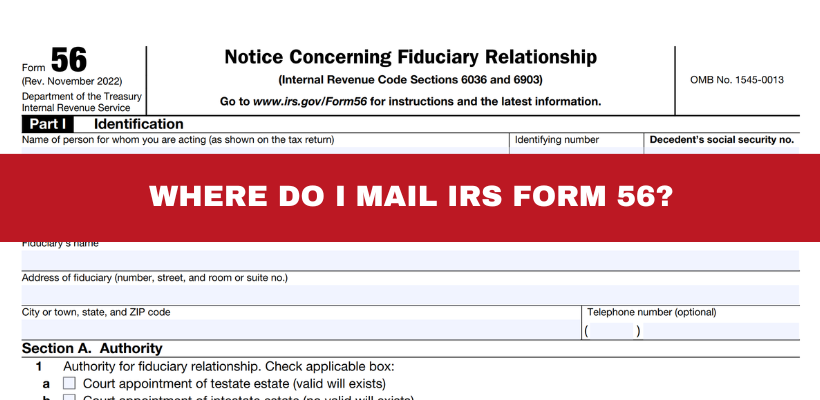
Stepping into the role of a fiduciary is a major milestone. Whether a court has just appointed you as the guardian of an incapacitated relative or you are beginning the process of managing a deceased family member’s estate, you are legally responsible for protecting their financial interests.
As part of your new responsibilities, you must formally notify the Internal Revenue Service that you are acting on behalf of another person or entity. This is accomplished by filing IRS Form 56, the Notice Concerning Fiduciary Relationship. While completing the form itself is relatively straightforward, many fiduciaries are unsure where to send it and what documentation must accompany it. Understanding the filing process can help avoid unnecessary delays and establish your authority with the IRS as quickly as possible.
Why IRS Form 56 Cannot Be Filed Electronically
Unlike many modern tax forms, IRS Form 56 generally cannot be submitted through standard e-file systems used for individual tax returns. Instead, fiduciaries typically submit the form by mail along with documentation supporting their authority to act on behalf of the taxpayer.
The IRS requires evidence that you have been legally authorized to manage another person’s tax matters. Depending on the circumstances, this may include court-issued guardianship documents, letters testamentary for an estate, trust documents, or other records establishing your fiduciary relationship.
Because the IRS must review both the form and the supporting documentation, submitting a complete package is important. Missing documents can lead to processing delays and make it more difficult to establish your authority with the agency.
Where Do I Mail IRS Form 56
IRS Form 56 is not mailed to a single national processing center. Instead, the correct address generally depends on where the taxpayer or entity you represent is required to file federal tax returns.
For example, if you are administering a deceased individual’s estate, the appropriate mailing address is typically tied to the decedent’s state of residence. Guardians, conservators, and trustees should also verify the appropriate filing location before sending the form.
Before mailing the package, it is wise to confirm the current address listed in the IRS instructions for Form 56. IRS processing locations can change, and sending the form to the wrong service center may result in additional delays.
Many fiduciaries choose to use Certified Mail or another trackable delivery method. Keeping proof of mailing and delivery can be valuable if questions arise later regarding when the IRS received the notification.
What Happens While IRS Form 56 Is Being Processed?
After the IRS receives Form 56, the agency must review the documentation and update its records to reflect the fiduciary relationship. This process can take several weeks and, in some situations, longer. During this period, fiduciaries may encounter practical challenges.
IRS representatives may be unable to discuss certain account matters until the agency’s records have been updated. This can be frustrating when you are trying to obtain tax information, resolve outstanding compliance issues, or address existing tax debts. The situation becomes even more urgent when the taxpayer already has unresolved IRS problems. If unfiled tax returns, federal tax liens, levy notices, or other collection matters exist, the normal processing timeline may not move quickly enough to address immediate concerns.
Establishing your fiduciary relationship is an important first step, but it does not automatically stop ongoing IRS collection activity. If the account is already facing enforcement actions, additional steps may be necessary to protect assets and resolve the underlying tax issues.
Final Thoughts
Filing IRS Form 56 is an important part of establishing your authority as a fiduciary. Understanding where to mail the form, what supporting documents may be required, and how long processing can take can help prevent unnecessary delays. However, filing the form is only the beginning.
If the taxpayer has unfiled returns, outstanding tax debt, active collection notices, or other IRS problems, additional action may be required. Working with an experienced tax attorney can help fiduciaries address these issues, communicate effectively with the IRS, and protect the interests of the individual, estate, or trust they have been appointed to represent.




 Steven N. Klitzner, P.A. is a tax attorney based in Miami, Florida. He has been practicing tax law for over 40 years, and currently holds a 10.0 rating by Avvo. Mr. Klitzner was appointed to the IRS Service Advisory Council in 2021 and is...